Overcoming Imposter Syndrome as an Adult Learner
Author: Victoria Buckley, Head of Teaching & Learning and Learner Support, Innopharma Education
Imposter syndrome doesn’t discriminate.
You can be 18 or 48. A first-year student, a lecturer, a CEO or a PhD graduate. You can have years of experience, professional qualifications and a long list of achievements, and still find yourself wondering: “Do I really belong here?”
If you’ve ever felt that way, you’re not alone.
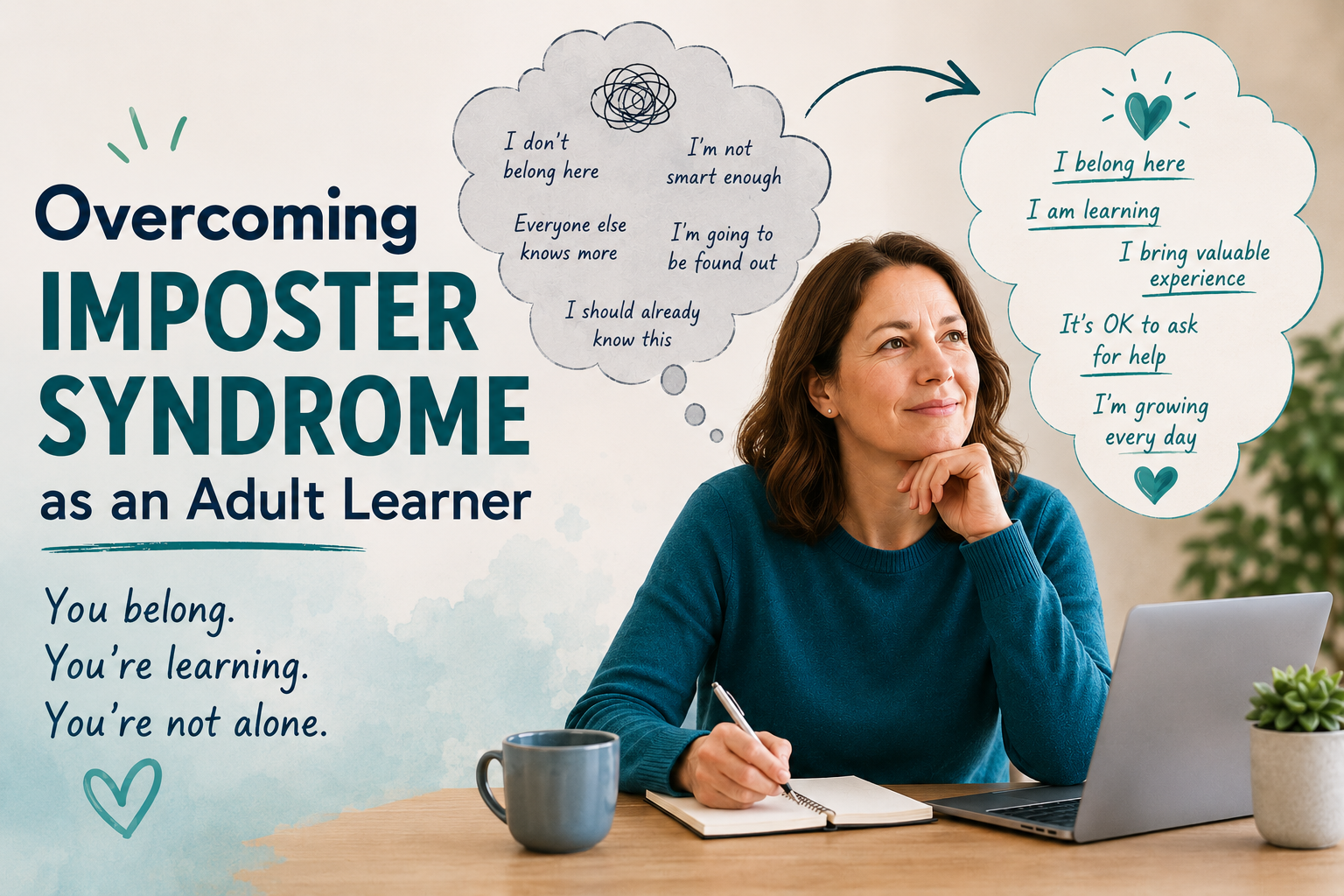
Simply put, imposter syndrome is the feeling that you don’t deserve your achievements or opportunities. It often shows up as self-doubt, fear of being “found out”, or the belief that everyone else is more capable than you are.
Why Adult Learners Often Experience Imposter Syndrome More Strongly
While imposter syndrome can affect anyone, adult learners often face additional challenges when returning to education. You may find yourself comparing your experience to other classmates, worrying about technology, or feeling out of practice academically. After years away from formal education, it’s natural to question whether you’ll be able to keep up.
The important thing to remember is that adult learners often bring significant strengths to the classroom, including professional experience, resilience, problem-solving skills and clear personal goals. Those strengths matter.
The Five Types of Imposter Syndrome
Researchers have identified several common patterns of imposter syndrome:
- The Perfectionist believes anything less than perfect is a failure.
- The Expert feels they should know everything before asking questions.
- The Natural Genius believes learning should come easily and struggles when it doesn’t.
- The Soloist finds it difficult to ask for help.
- The Superhuman tries to excel in every area of life at once.
You may recognise yourself in one of these descriptions, or perhaps a combination of several. Whether you identify with one or all five, it’s important to note that experiencing these thoughts does not mean they are true.
Building Confidence as an Adult Learner
The goal isn’t to eliminate every moment of self-doubt. The goal is to develop enough self-belief and academic confidence that doubt doesn’t stop you from participating, learning and progressing.
A few practical strategies can help:
- Focus on Your Own Journey: Every learner arrives with different experiences and goals. Your progress does not need to look the same as anyone else’s.
- Recognise Your Strengths: Professional experience, life experience and resilience are valuable assets in higher education. Don’t underestimate what you bring to the learning environment.
- Ask for Support: Reaching out to lecturers, classmates or learner support services is a sign of engagement, not weakness.
- Celebrate Small Wins: Completing an assignment, contributing to a discussion or mastering a new skill are all signs of progress.
Try replacing: “I should already know this” with “I’m learning this.”
A Helpful Mindset Shift
Education is not about proving that you already know everything. It’s about developing new knowledge and skills over time. Many adults return to education for upskilling, reskilling, professional development and personal growth. Learning is the goal, not perfection.
You Are Not Alone
Many successful students, professionals and leaders experience imposter syndrome at some point in their lives. What matters is not whether those thoughts appear, but whether you allow them to define what you’re capable of achieving.
Returning to education takes courage. The fact that you’re showing up, learning and continuing despite uncertainty is already evidence of resilience, commitment and a desire to grow. And that deserves recognition.
This article is part of our series exploring the journey of adult learners returning to education. Coming up next, we’ll be looking at tips and tricks to help you gain confidence in studies again.
If you have missed our previous articles, click on the links below to read:
- Returning to Education as an Adult: What to Expect When Going Back to College
- Balancing Work, Life and Study: How Adult Learners Successfully Manage It
Find the right course for you and future-proof your career by upskilling for the thriving pharma, medical device, or food science sectors. Take a look at our range of courses here >>